On On Podcast

Category: Season 5

  • 5.25 Pukelids Taxivomitry

    5.25 Pukelids Taxivomitry

    Episode Summary

    Pukelid’s Taxi Vomitry was a high-school and college runner who moved to China to teach mathematics. After COVID temporarily sent him back to the United States, another Beijing running group mentioned where “all the good runners” went. He arrived knowing nothing about beer or trail marks, quickly learned the checks, attended twenty-five weeks in a row, and became central to the local kennel.

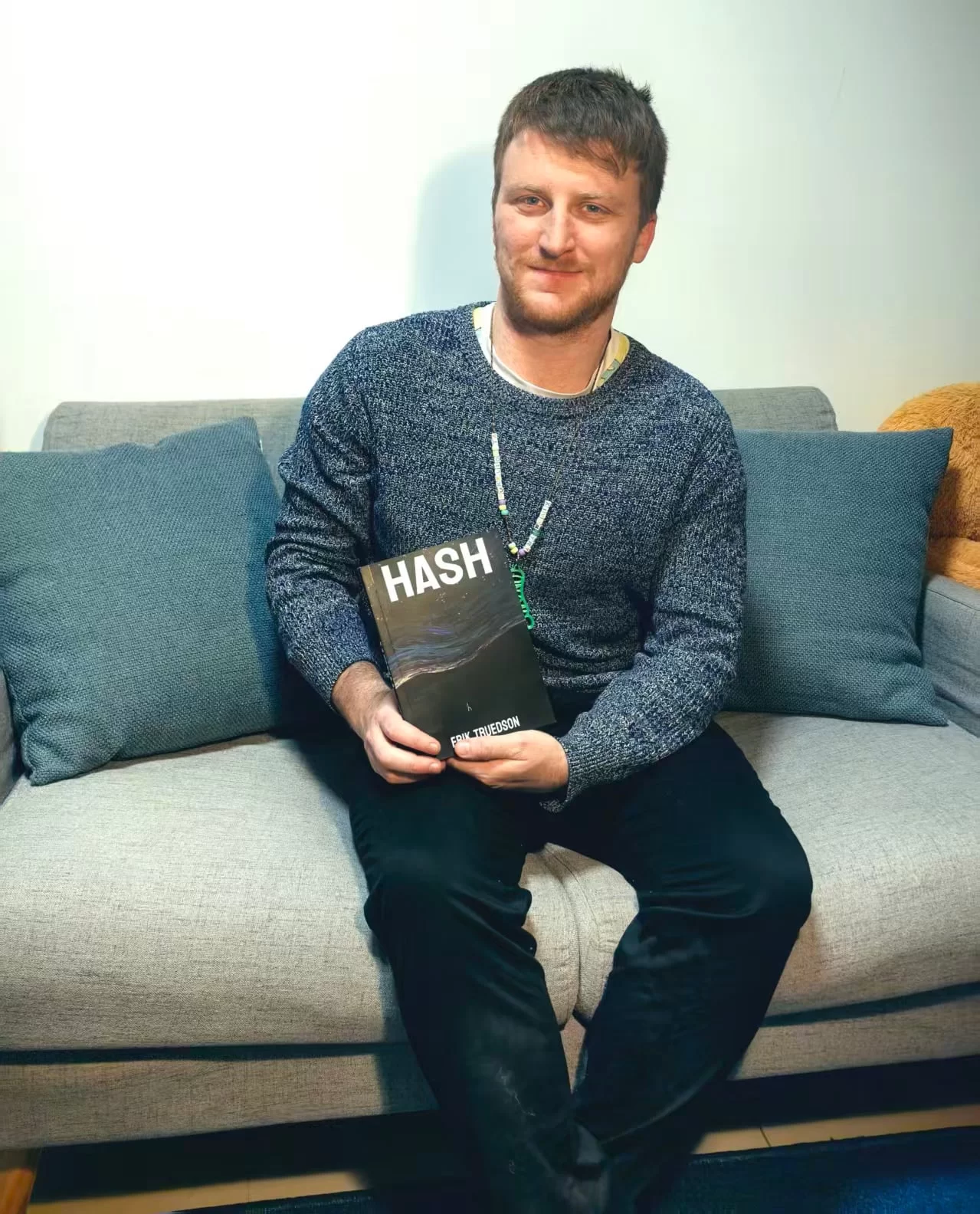
    His elaborate name combines Euclidean geometry with repeated tequila-fueled vomiting in taxis, though friends shorten it to Pukelid. The main subject is his self-published novel “Simply Hash,” developed from an earlier television script and shaped by Beijing, lockdown, and the structure hashing gave his life. He discusses fictionalizing real experiences, editing, publishing costs, AI, China’s changing environment, and the risks and rewards of presenting hash culture to a wider readership.

    On On 5.25 Pukelids Taxivomitry, 2020, Beijing H3, Boxer H3 (GM, R.A., Haberdaaher,…) author 2025 book: “Hash” – get it on Amazon! https://www.amazon.ca/Hash-Erik-Truedson-ebook/dp/B0G75H6YKB/ref=sr_1_1


  • 5.24 Hangs Loose

    5.24 Hangs Loose

    Episode Summary

    Hangs Loose quit smoking and began running in Yuba City, California, in 1979. After cheap shoes ruined his first 10K, a specialty shop connected him with the Running River Rats Hash House Harriers. Better footwear and natural speed soon made him a front-runner and local race winner, including a beer run in which he and a friend passed the pace car.

    He became GM, beer master, social director, and organizer for a club built around live trails, river rafting, races, and low-cost weekends. Later moves took him to Santa Cruz and other California hashes, while travel expanded through InterAmericas and beyond. He discusses the transition from racing to walking, lost memorabilia, awards, strong runners within hashing, and the origin of his name—earned while relieving himself behind a tree—across nearly five decades of participation.

    On On Podcast 5.24 Hangs Loose,

    1979, Running River Rats H3, Sacramento H3 (GM, Hare Raiser, beerMeister, Scribe, etc.), NorCal Campout Co-founder, Sacramento GM Emeritus, Santa Cruz H3

  • 5.23 King Sir Sir James by RunToEat

    5.23 King Sir Sir James by RunToEat

    Episode Summary

    King Sir Sir James reluctantly joined Madrid Hash in 1990, expecting little from a running club with a drinking problem. The rocky trails, rivers, scrub, and climbing converted him immediately. A real knighting in Portugal supplied “Sir James”; later recognition from fellow hashers added another Sir and eventually King, producing one of hashing’s most ceremonious names.

    At age eighty-six, with more than 1,450 Madrid runs and hundreds elsewhere, he reflects on hashing in Spain, Portugal, Brazil, Australia, and major international events. He discusses hared trails, GM and RA duties, Madrid’s thousandth-run celebration, children and dogs, walkers, technology, aging members, and why hashes should still run in the rain. The lively interview portrays a traditionalist who remains deeply engaged, opinionated, and active well into his ninth decade.

    𝐎𝐧 𝐎𝐧 𝐏𝐨𝐝𝐜𝐚𝐬𝐭 episode 5.23 Interview with King Sir Sir James by Run To Eat, 1990, Madrid H3 (all misman but Hare Raiser), Algarve H3, maybe eldest active GM (age 86)-MadridH3

  • 5.22 Laid Bird

    5.22 Laid Bird

    Episode Summary

    Laid Bird learned about hashing after Stockholm hashers handed out beer near the finish of a midnight 10K. She joined on October 17, 2007, ran to the start without realizing a hash car held dry clothes, and needed two cold, wet outings to master the logistics. The welcoming thirty-person pack felt like a family she had been missing.

    Hashing soon led her from casual racing to an improvised, barely trained Stockholm Marathon, then into Eurohash, UK Nash Hash, and extensive travel. She has served as RA, hash cash, and GM, guiding a club that shifted from almost all runners to a roughly even mix of runners and walkers. She discusses naming, live trails, COVID transit hashes, international friendships, public encounters, and the continuing challenge of attracting younger members without losing the social heart of Stockholm Hash.

    Laid Bird, 2007, Stockholm H3, Absolut Hash, Hash Cash, RA, GM … started Sweden National Day Hash

  • 5.21 Thanks for The Mammaries-IAH2027 Bid

    5.21 Thanks for The Mammaries-IAH2027 Bid

    Episode Summary

    Thanks for the Mammaries presents Central Florida’s bid to host InterAmericas Hash 2027 in Orlando. An Orlando hasher since 1999, veteran of multiple InterAmericas gatherings, former long-term mismanagement member, and recipient of 500-run and 75-hare honors, she leads a committee representing several area kennels rather than a single club.

    This focused event episode explains why the group wants to revive a continental gathering absent since 2019 and how it plans to avoid previous organizational failures. Topics include an LLC, multiple account signers, professional bookkeeping, financial transparency, inflation, hotel food-and-beverage restrictions, off-site venues, buses, trails, registration transfers, insurance, and a charitable Red Dress Run. The bid is framed both as an Orlando proposal and a call for healthier succession planning across InterAmericas.

    Interview with Thanks for the Mammaries, Ms. Interam 2007, Orlando, Eurohashing, Bus/train/boat Hasher… Leading bid Team for InterAmericas 2027 from Orlando/Central Florida

  • 5.20 SpeedWanker

    5.20 SpeedWanker

    Episode Summary

    Speed Wanker’s first hash came through a chance encounter while covering paintball in Penang, Malaysia. He accepted a stranger’s address, followed the group into the jungle, and spent the next few days exploring with new friends. Years later in Portland, Maine, he misread a “pie rat” theme as “pirate,” arrived in full costume, and knew the pack’s elaborate joke meant he had found his people.

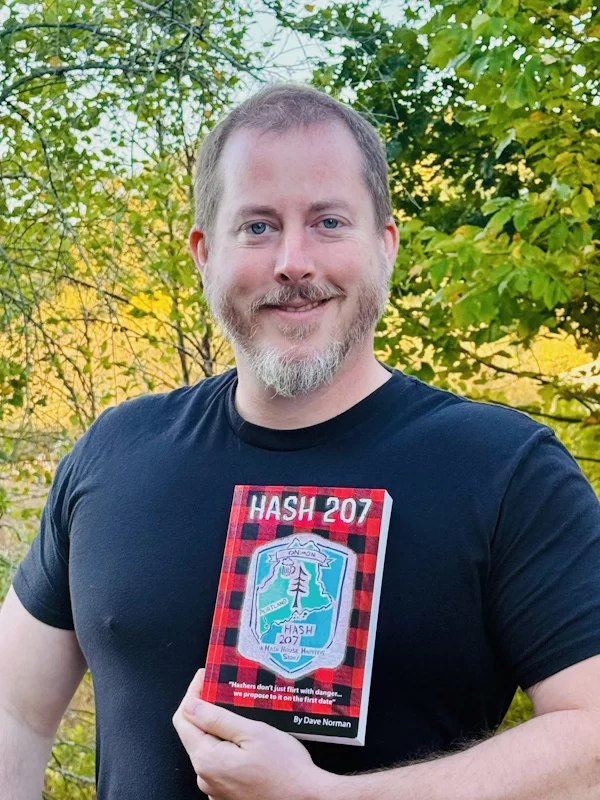
    The episode centers on his novel “Hash 207,” begun roughly eleven years earlier and finally published in 2025. He explains how hashing becomes an ordinary part of the characters’ lives rather than an exotic subject, the long drafting and revision process, and the choices involved in publishing and promoting a niche novel. Personal stories, Portland kennel culture, creativity, and community illuminate the real experiences behind the fiction.

    On On 5.20 SpeedWanker 2010, Penang, Author: Hash 207:  A Hash House Harriers Story, PorMe H3( Hare Raiser, R), Knight Villains H3, Read chapter 1 *free* of “Hash 207”:  https://hash207.com/chapter-one/

  • 5.19 PilsBarry

    5.19 PilsBarry

    Episode Summary

    Pillsbury reluctantly joined Calgary Hash in 1985 to please a girlfriend newly returned from Sierra Leone, only to discover that the supposed running club was exactly his kind of social activity. The young kennel had been founded by oil-industry returnees from Southeast Asia and could attract its biggest crowds in temperatures below minus thirty. Barry Dough became Pillsbury Doughboy, later shortened to Pills or Pillsbury.

    After moving to Malaysia, he served as GM and ultimately became Mother Hash’s official historian. The episode examines membership limits, trail funding, leadership, surviving documents from founders such as Frank Woodward, debates over the 1938–39 origin, inaccurate retellings, and the new Hash Heritage site and clubhouse. Pillsbury combines archival evidence with practical knowledge of how Mother Hash operates today, offering one of the season’s most detailed historical interviews.

    PilsBarry, 1985, Calgary, KL since 1987 (ex OnSec, Mother’s official Hashtorian since 2008)
    Save the date – Mother Hash 90th anniversary: 8-10 September 2028.  If you have Mother Hash historical info contact barrydawe@gmail.com. Spoiler “ The great misunderstanding; the Selangor Club is not the home of hashing.”.

  • 5.18 Sir Songman

    5.18 Sir Songman

    Episode Summary

    Sir Songman began with Jakarta’s Monday men’s hash in 1978, when expatriates found run information on supermarket notices and the city still offered very different terrain. Early singers, including Penguin and other memorable characters, introduced him to the strong musical culture for which Jakarta hashing became famous. Later postings carried him through Bandung, China, Hanoi, Europe, and beyond.

    Known first as Peter the singer, he became Songman in China and eventually Sir Songman after receiving a real knighthood. He reflects on songs, circles, long trails, mixed and single-sex kennels, event travel, changing communications, walkers, and the challenge of keeping older members included. Still active in the Netherlands, he argues that a lively circle and a double-entendre name can preserve fun without relying on cruelty or vulgarity.

    On On Podcast 5.18 Sir Songman|

    1978, Jakarta, Shanghai, Hanoi, Thailand, Nepal, India, many more, Mekong Indochina survivor

  • 5.17 ShitCocky Noodles

    5.17 ShitCocky Noodles

    Episode Summary

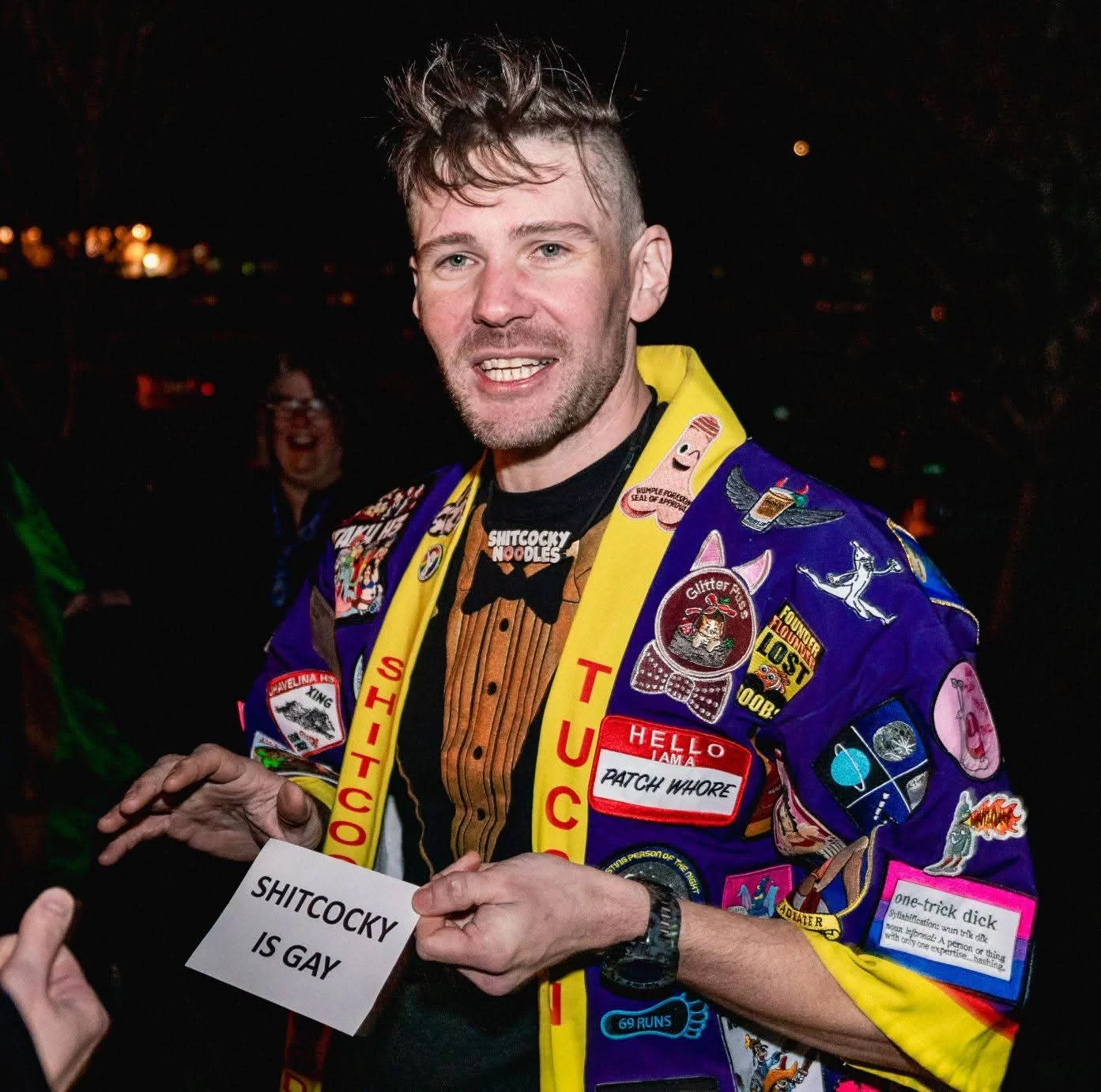
    Shitcocky Noodles arrived at a Tucson hash in October 2017 dressed head-to-toe as a cup of ramen. The kennel happened to run its program in reverse that day—naming, circle, then a token trail—so his second outing was needed to learn what a normal hash looked like. The humor, camaraderie, and immediate sense of belonging nevertheless hooked him at once.

    He quickly moved into GM and RA roles, became a dedicated event traveler, and embraced Tucson’s distinctive checks, costumes, and desert culture. An ulcer eventually forced him to stop drinking, but he found that sobriety improved his RA work without reducing his enthusiasm or appetite for spectacle. He discusses Tex-Mex, Phoenix Red Dress, crash space, patches, ramen fashion, and how hashing gave a restless young adult both a home and a worldwide route for exploration.

    2017, Tucson /Mr. Happy’s, (GM),  jHavelina’s H3 (GM/RA), Mr. Tex-Mex 2020

  • 5.16 Thunder Thighs – by Run2Eat

    5.16 Thunder Thighs – by Run2Eat

    Episode Summary

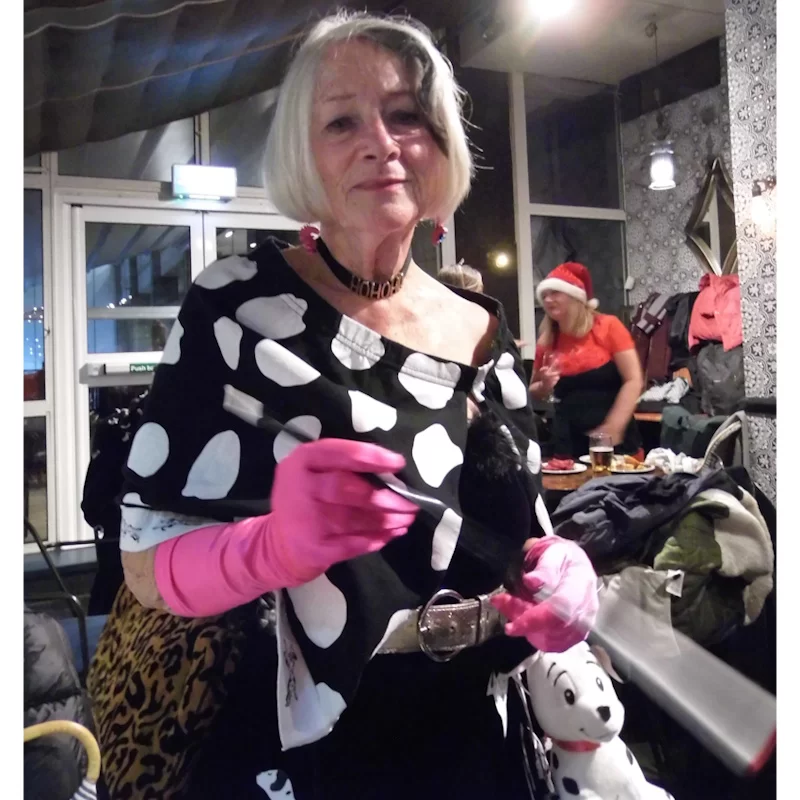
    Thunder Thighs began with London Hash on Hampstead Heath on September 6, 1978, when the club was only two years old and hash names were uncommon. As overseas visitors arrived with names, she chose her own—an obvious joke about her strong legs—and became part of London’s transition from a male-oriented expatriate tradition to a more inclusive modern community.

    Recorded at UK Nash Hash 2025, she recalls early travel, founding a short-lived Harriettes kennel, favorite smaller events, injuries in Kraków and England, memorabilia, and decades of friendships. She dislikes mega-events, needlessly vulgar songs, and ceremonies that overshadow true hare-and-hounds trail, preferring camaraderie and socialization. Her account also tracks how newsletters, Facebook, and WhatsApp changed recruitment and how COVID unexpectedly produced new London kennels.

    Thunder Thighs started Hashing in 1978, London H3, founded Royal London Harriettes and Pink Prosecco Posse.